Your Access Rights
Security policies can depend on the service, the source and conditions on the record itself, so it is not always obvious what you can do with a particular item. Your Access Rights asks the platform directly and answers questions like:
- Can I update this record, or only read it?
- Am I allowed to edit the properties that come from its type?
- Why does saving this item fail with a permission error?
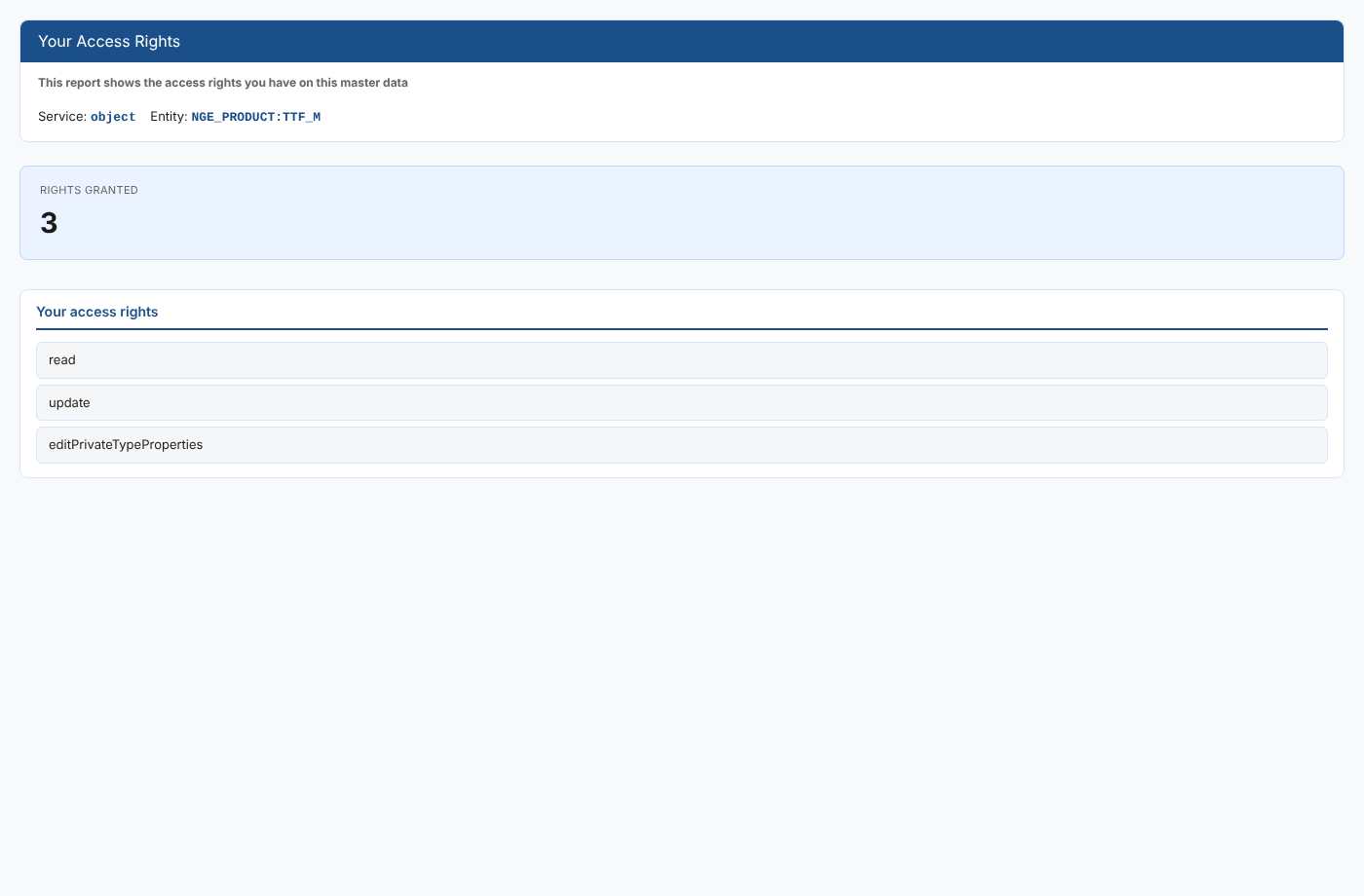
At Northgate Energy, Priya Shah is a data steward. On the TTF front month product NGE_PRODUCT:TTF_M her rights include editPrivateTypeProperties, granted by the data stewards' policy, so she can change its product properties. Traders see only read.
Opening the report
This is an item insight: open an item, then choose Your Access Rights from its insights. The template is registered twice:
| Report id | Category | Where it appears |
|---|---|---|
#INSIGHT_ITEM_USERRIGHTS | Item Insights | The insights of items on screens that offer the general item insights |
#MDI_USERRIGHTS | Master Data Insights | The insights of a master data record (service object) |
The screen passes the item's service and id. For a dataset, the report uses the dataset id. There are no controls: the report loads as soon as it opens.
The report
| Part | What it shows |
|---|---|
| Service, Entity | The service and id the rights were worked out for |
| Rights granted | How many actions you are allowed |
| Your access rights | Each action you are allowed, one per line |
Typical actions are read, create, update and delete; some services add their own, such as run. On master data the list can also include editPublicTypeProperties and editPrivateTypeProperties, which allow changing properties declared on a public or private type. These two are never granted by default, so a data steward needs a policy that includes them.
If nothing is allowed, the report shows No access rights found for this service and entity.
Where the data comes from
The report calls the platform's rights function on the policy service with the item's service, source (public for an id starting with #, otherwise private) and id. The platform applies your security policies in the current data environment, including deny policies and conditions on the record.
Related
- Security & Access Insights: all policies, groups and users side by side
- Item Audit Report: who changed the item
- Security policies
- Insights: how insight reports work